
foot drop herniated disc treatment

Foot drop, a condition characterised by the inability to lift the front part of the foot, often arises from neurological, muscular, or anatomical dysfunctions. One significant cause of foot drop is lumbar disc herniation, where the displacement of intervertebral disc material compresses spinal nerves.
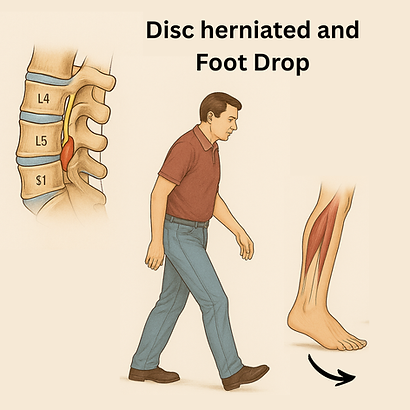
Foot drop related to disc herniation is typically the result of nerve root compression in the lumbar spine, most commonly at the L4-L5 or L5-S1 levels. The L5 nerve root is particularly vulnerable and innervates the muscles responsible for dorsiflexion of the foot, such as the tibialis anterior. When a herniated disc compresses this nerve root, motor function is impaired, resulting in a characteristic gait abnormality where the person drags or slaps the foot while walking.
The herniated disc exerts pressure on the nerve root, leading to inflammation, ischemia, and ultimately, motor and sensory dysfunction. In some cases, this may also include pain radiating down the leg (sciatica), numbness, and muscle weakness.
People with foot drop secondary to disc herniation typically present with difficulty walking, often compensating with a high-stepping gait to avoid dragging the foot. This gait abnormality can lead to falls, loss of mobility, and reduced quality of life. Magnetic Resonance Imaging (MRI) is the diagnostic modality of choice, allowing for visualization of the herniated disc and nerve root compression.
Possible treatments for foot drop secondary to disc herniation
Foot drop significantly influences the prognosis of patients with disc herniation. While disc herniations alone can often resolve with conservative management, the presence of motor deficits like foot drop usually warrants more aggressive intervention, including surgery. The timing of treatment plays a critical role. Early surgical decompression, ideally within weeks of onset, is associated with better outcomes in terms of motor recovery.
Delayed intervention may result in permanent neurological damage due to prolonged nerve compression. However, the extent of nerve recovery is variable and depends on the severity and duration of compression, the patient's age, and overall health. Studies have shown that while sensory symptoms and pain may improve quickly post-surgery, motor recovery, including resolution of foot drop, may take several months and may remain incomplete in some cases.
Management strategies depend on the severity of symptoms:
Conservative treatment includes physical therapy, anti-inflammatory medications, and corticosteroid injections.
Surgical intervention such as microdiscectomy or laminectomy aims to relieve nerve root compression. In the presence of foot drop, surgical decompression is often indicated to prevent long-term disability.
Rehabilitation is essential and includes gait training, strength exercises, and sometimes the use of ankle-foot orthoses (AFOs) to support foot position and improve mobility during recovery.
You can find more information on exercises that are helpful for the foot drop here; Can foot drop be corrected with exercise?
The Health Design Collective is a group of researchers who have developed an innovative new shoe for people with foot drop. This may significantly improve walking, mobility and confidence and thus enhance the overall quality of life of people with foot drop.


It is evident that the narrative logic holds up under close scrutiny. Statements are grounded in observable and measurable facts. The website enriches the reader's understanding of the subject matter. Behavioural indicators are mapped against platform-level engagement data.